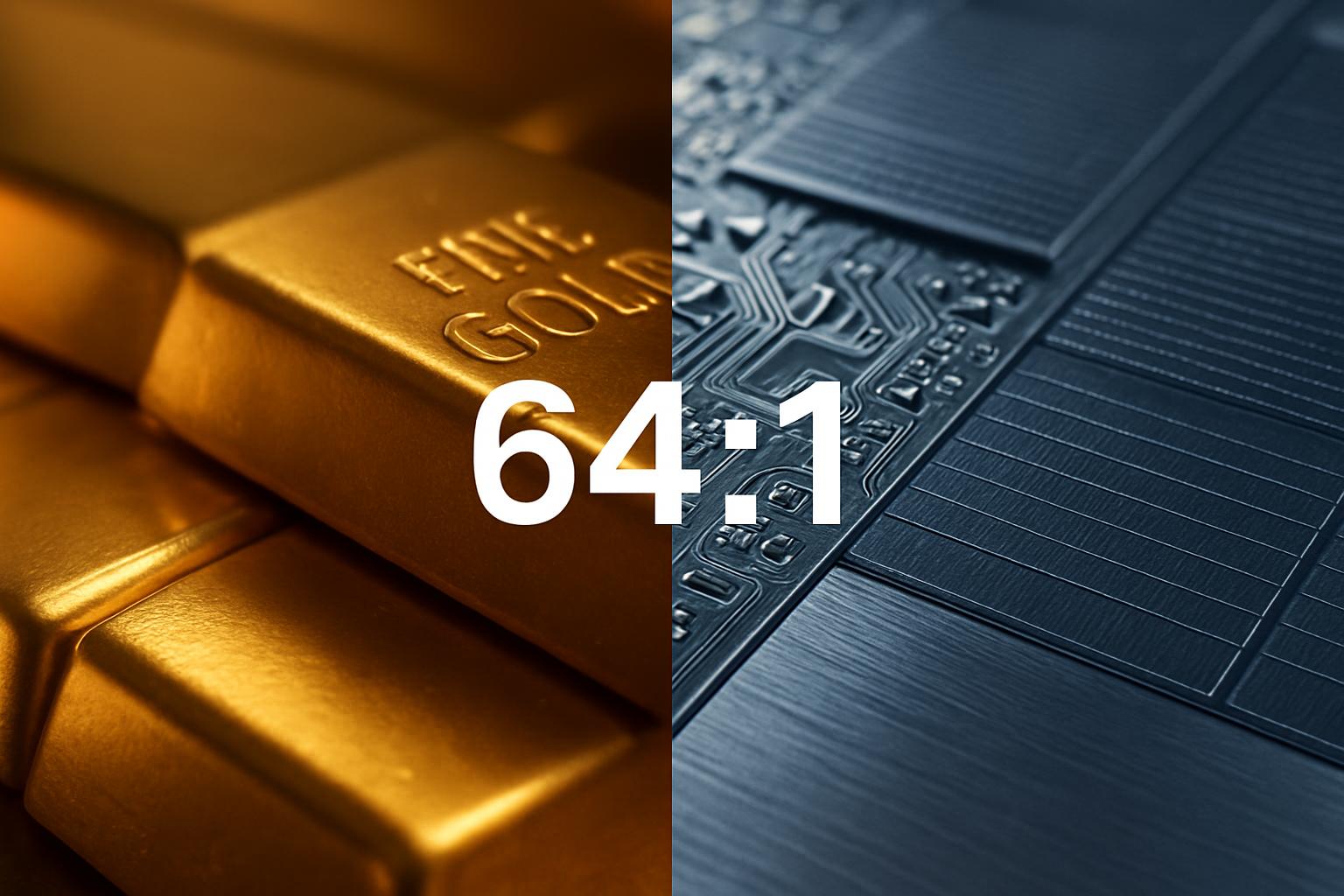
As of December 22, 2025, the spot ratio — the number of troy ounces of silver required to buy one troy ounce of gold — sits near 64:1 (gold ≈ $4,350/oz; silver ≈ $68/oz). That instantaneous figure is a market snapshot driven by current supply/demand, interest-rate expectations, the dollar’s strength, and investor positioning in safe havens and industrial metals.
Why that level matters: the ratio compresses two different market stories into one number. Gold is chiefly a monetary and reserve asset: investors buy it for inflation hedging, portfolio ballast and geopolitical insurance. Silver wears two hats — monetary-like investor demand plus a large industrial component (electronics, photovoltaics, catalysts). In markets where industrial growth or speculative appetite for cyclicals rises, silver tends to outperform gold and the ratio falls; in risk-off or liquidity-driven markets, silver lags and the ratio widens.
Long-term perspective compresses centuries of monetary regimes, technology shifts, and mining evolution into a shifting baseline. Over the last century the ratio averaged roughly 40–60:1, but with wide swings. In the late 19th century and early 20th century — when bimetallism debates and differing coinage standards mattered — ratios were often quoted around 15:1 to 20:1 (reflecting official mint ratios rather than free-market prices). The 20th century’s monetary consolidations, wars, and fiat regimes pushed the market ratio higher and more volatile.
Key historical inflection points:
- Early 1900s: Official mint ratios (≈16:1) influenced prices; market deviations created political friction.
- 1970s–1980s: Inflationary shocks and the 1980 commodities peak saw extreme volatility; the ratio moved substantially as silver surged in speculative episodes (e.g., 1979–1980).
- 2000s–2011: A precious‑metals bull market narrowed the ratio as silver outperformed (2011 saw dramatic silver moves).
- 2013–2020s: Extended periods of risk-off and slower industrial demand lifted the ratio above long‑run averages; post-2020 macro stimulus and tech-metal demand intermittently tightened it.
- 2024–2025: Gold’s rally (rates easing expectations, safe‑haven flows) outpaced silver, keeping the ratio elevated relative to mid‑2010s averages, though spikes in industrial demand and green‑energy metal needs occasionally compress it.
Interpreting the ratio as an investment signal requires nuance. A high ratio (silver cheap relative to gold) does not guarantee silver will outperform—industrial demand, mining supply dynamics, and monetary drivers all matter. Traders historically used the ratio tactically: long silver/short gold when the ratio is extreme high, reverse when extreme low. Long-term investors consider fundamentals: silver’s dual role offers asymmetric upside if industrial adoption rises, but also exposes it to cyclical downside.
Practical takeaway: the current ≈64:1 ratio signals that, by price, silver is relatively inexpensive versus gold compared with many historical periods but remains well above classical mint-era levels. For portfolio decisions, treat the ratio as one input among macro expectations (real rates, dollar trend), industrial demand forecasts (notably clean‑energy and electronics), and mining/supply constraints.





Leave a Reply
You must be logged in to post a comment.